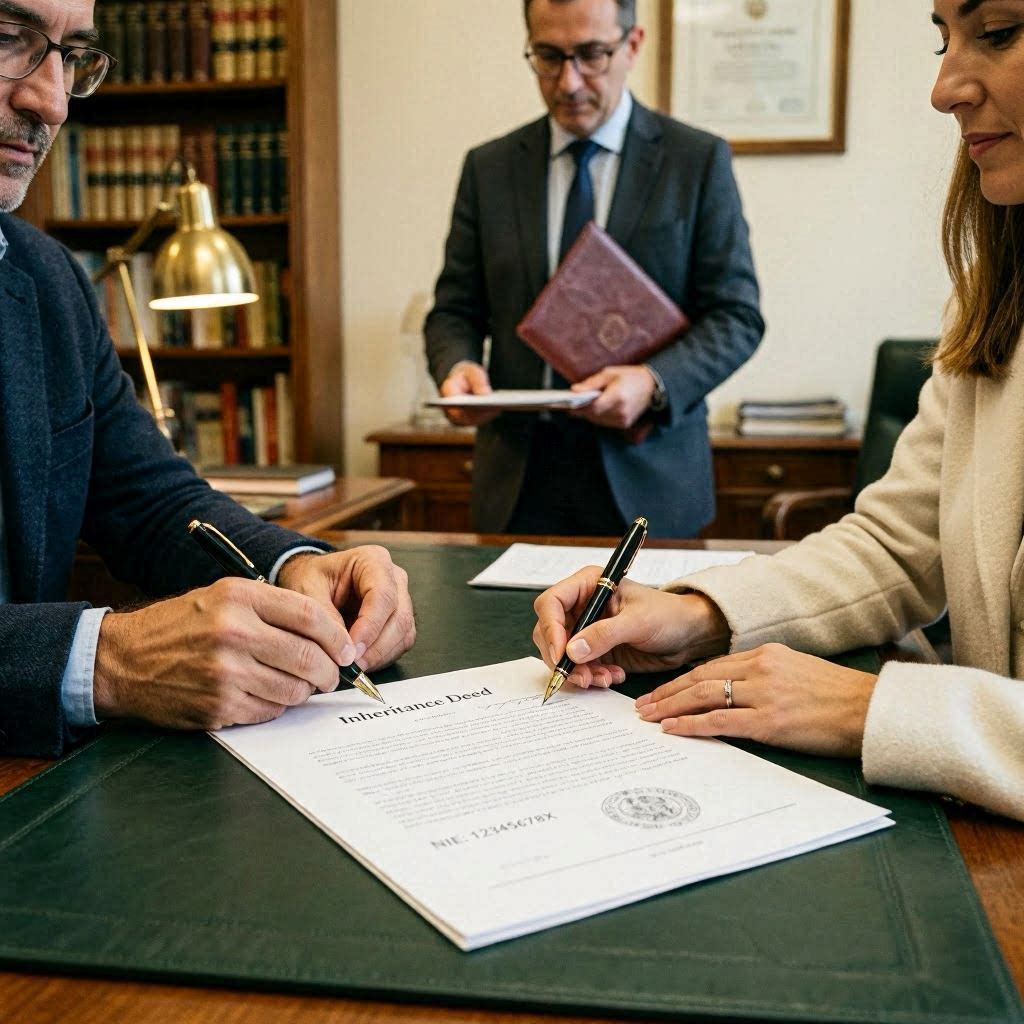


Why are criminal records so important in immigration matters?
Criminal records are, by far, one of the main reasons for denying residence and work permits in Spain. The regulations are clear and leave no room for interpretation: the applicant cannot have a criminal record in Spain or in the countries where they have resided during the last five years.
This requirement affects virtually all immigration procedures:
- Social roots, job stability y family ties
- Rooting by training
- Residence and work permit for employed or self-employed individuals
- Job seeker visa
- Non-profit residency
- Renewals of any residence permit
- Application for Spanish nationality by residence
The most serious issue is that many people are unaware they have a criminal record or that it could already be expunged, and they submit their application with a compromised file. The result is a denial that delays their regularization process for years.
Key fact: Even a suspended sentence (without imprisonment) results in a criminal record. A suspended sentence is not the same as the absence of a conviction.
What are criminal records?
Criminal records are the entries in the Central Register of Convicts (dependent on the Ministry of Justice, regulated by Royal Decree 95/2009) which include the final criminal convictions issued by the Spanish courts.
For a conviction to be registered in the Central Register of Convicted Persons, two elements must be present: a final (non-appealable) sentence and a specific penalty (deprivation of liberty, fine, community service, disqualification, etc.).
It is essential to distinguish between two types of records that are frequently confused:
Criminal record
Notes by final judgments from a court. They are registered in the Central Registry of Convicted Persons of the Ministry of Justice. Their cancellation requires an express request to the Ministry and compliance with the deadlines of article 136 of the Penal Code.
Criminal record
Notes administrative Records are kept for arrests, investigations, or police procedures, even if there has been no conviction. They are registered in the databases of the National Police and the Civil Guard. They are cancelled differently and before a different body (National Police), in accordance with Organic Law 7/2021.
Both are relevant for immigration procedures. It is a common mistake to have criminal records expunged from the Ministry of Justice and assume the file is clean, unaware that police records remain in police databases. In a social integration procedure, for example, the police issue their own report, which can be decisive for the outcome.
What background information about the country of origin needs to be provided?
Spanish regulations require the submission of Criminal record certificate from the country or countries where you have resided during the five years prior to entering Spain. If you have only lived in Spain for the last five years, you only need the certificate from your country of origin.
This certificate must:
- Be apostilled according to the Hague Convention (or legalized by the Spanish consulate if the country has not signed the Convention)
- Go accompanied by sworn translation into Spanish if it's in another language
- To have a maximum validity of 3 to 6 months (This varies by country), so don't apply too soon in relation to the date you submitted your application.
Criminal records in Spain are checked automatically by the Administration, so you generally don't have to provide them yourself—but they can be grounds for refusal if they exist.
Timeframes for canceling criminal records: complete table
The cancellation of criminal records is regulated in the Article 136 of the Penal Code. The deadlines begin counting from the day after the completion or final extinction of the sentence (not from the date of sentencing, but from the date the sentence is completed).
| Type of penalty / severity | Cancellation period |
|---|---|
| Minor penalties (up to 3 months) | 6 months |
| Less serious penalties up to 12 months or for negligent offenses | 2 years |
| Less serious penalties between 12 months and 3 years | 3 years |
| Serious penalties between 3 and 5 years | 5 years |
| Serious penalties exceeding 5 years | 10 years |
| Sexual offenses against minors (victim is a minor, convicted person is of legal age) | 30 years |
Essential conditions for the deadline to be valid:
- Have sentence served in full imposed (including accessory penalties and fines)
- There is no committed no intentional crime throughout the entire waiting period. If there is a repeat offense, the counter resets to zero with the new sentence.
- Have satisfied civil liabilities arising from the crime (compensation, damages). This point generates many problems: if there is outstanding compensation, the record cannot be expunged until it is paid or its impossibility is proven.
- Not having pending criminal proceedings
Attention: When there are multiple convictions for different offenses, the applicable time limit is that of the more severe penalty. They are not cancelled individually; you have to wait for the longer deadline.
Are criminal records automatically cancelled?
Technically, Article 136.1 of the Penal Code provides that the Ministry of Justice can cancel them ex officio when the requirements are met. In practice, however, this does not always happen. It is very common for the deadlines to pass and the records to remain in the Registry because no one has expressly requested their removal.
That's why, The general recommendation is to actively request cancellation. As soon as the deadlines are met, without waiting for the Administration to act on its own initiative. In the context of an immigration procedure, where time is of the essence, you cannot afford that risk.
How to clear a criminal record in Spain: step by step
The procedure is accessible and can be done in person or online. These are the steps:
Step 1: Verify that you meet the deadlines
Check the exact date the sentence is considered served. This is the starting point for calculating whether the cancellation period has already expired. If you have any doubts about the calculation, especially if there are multiple convictions or additional penalties, consult a specialist before submitting the application.
Step 2: Request your current criminal record certificate
Before initiating the cancellation process, obtain your current certificate to know exactly what records are still on file and from when. You can request it online through the Ministry of Justice's website.
Step 3: Gather the documentation
The cancellation request must include:
- Name, surname, parentage, date and province of birth
- Identity document Valid: ID card, NIE, residence permit or passport
- Address and contact details (phone or email for notifications)
- Optionally: certificate of completion of sentences issued by the court that handed down the sentence (it is not mandatory, but it speeds up the process if the Ministry does not have the updated data)
- If there are compensations: documentation that proves their payment or impossibility
Step 4: Submit the application to the Ministry of Justice
There are three ways:
- Telematics (recommended): Through the Ministry of Justice's online portal. It requires a digital certificate, Cl@ve system, or electronic ID card. It's the fastest option.
- In person: At the Territorial Offices of the Ministry of Justice or at any Public Registry
- By mail: Addressed to the Central Registry of Convicted Persons
The procedure is gratuitous, It does not require payment of fees (although there is form 790 for obtaining the background check certificate).
Step 5: Wait for the resolution
The Ministry of Justice has a legal deadline of 15 business days to resolve from the submission of the complete application, although in practice the process may extend between 1 and 3 months depending on the workload.
If the decision is favorable, the Registry is updated and the record is expunged. From that moment on, your criminal record certificate will be clear and you can use it for your immigration procedures.
Can they be cancelled before the deadline?
This is one of the most frequently asked questions. The general answer is NoThe time limits established in Article 136 of the Criminal Code are fixed and cannot be negotiated or reduced. There is no standard procedure for early termination.
However, there are exceptional situations that can be studied on a case-by-case basis:
- Private pardon: It may extinguish the penalty or part of it, which would modify the start date of the calculation of the term.
- Errors in calculating the deadline: Sometimes the Ministry does not have the exact date of extinction of the sentence updated and the deadline has already passed without the cancellation having taken place
- Statute of limitations for the penalty: If the sentence has expired without being served, the extinction occurs at that moment, not at the end of the sentence.
If you believe your case may have any of these characteristics, consult a specialist before submitting any immigration application.
Impact on immigration procedures: when to act
The timing of when a background check issue is detected is crucial to the outcome of your application. These are the most common situations:
Before submitting the application (ideal situation)
If you haven't started any procedures yet, you have time to clear your criminal record before submitting your application. This is the ideal scenario: the Immigration Office won't see any record of your criminal activity, and your application will proceed smoothly.
At NIESPANA, we analyze your criminal and police record before submitting any application. This is one of the first checks we perform because it prevents avoidable rejections.
Application in process with pending background information
If you have already submitted your application and the Immigration Office detects any outstanding issues, it will likely issue a request for corrections or even a proposal to deny your application. At this point, it is crucial to act quickly and seek expert advice.
Denial due to prior record
If the application has already been denied for this reason, there are avenues of appeal (appeal to a higher authority, administrative litigation), although the deadlines are very short. If the record has been cleared between the denial and the resolution of the appeal, this significantly strengthens the position.
Renewal of permit with new background
If you already have legal residency and have been convicted during its validity, renewal may be jeopardized. Analyze the situation well in advance; don't wait until the expiration date.
Common mistakes that cost a lot
Confusing criminal records with police records. As explained, these are separate records held by different agencies. Canceling criminal records does not automatically erase police records, and in many immigration procedures, both are reviewed.
Failure to provide the certificate of country of origin. This is grounds for rejecting the application. Many foreigners are unaware that they must provide a criminal record certificate from their country (and from all countries where they have resided in the last 5 years before arriving in Spain), apostilled and translated.
Requesting the certificate too far in advance. Foreign criminal record certificates have a limited validity period (generally 3 to 6 months). If you request it too soon, it may expire before you submit your application.
Failure to prove payment of civil liability. If the judgment included compensation and it has not been paid, the cancellation is not applicable even if the deadlines have passed.
Assuming that the record has been cancelled on its own. As we have seen, automatic cancellation does not always occur. Actively checking the Registry's status before submitting any request is essential.
Frequently Asked Questions
Does having a criminal record always prevent me from obtaining residency? It depends on the timing. If the record has already been expunged (because the time limits have expired and expungement has been requested), it has no effect on your application. The problem arises when the record is still active at the time of application.
What if my background is from another country? Spanish law requires a clean criminal record in previous countries of residence as well. If you have a criminal record in your country of origin or other countries where you have lived in the last 5 years, it may be relevant to your application in Spain, depending on whether the offense is equivalent under Spanish law.
Can I request the cancellation myself or do I need a lawyer? The law does not require legal representation. The process can be completed directly with the Ministry of Justice. However, in complex situations—multiple convictions, convictions abroad, criminal records, appeals against denials—specialized advice is highly recommended to avoid errors that could cost you months or even the application itself.
Once a criminal record is expunged, does it disappear forever? For ordinary purposes, yes. Once cancelled, the Registry will not include them in certificates issued for routine procedures. However, judges and courts may continue to access this information in legal proceedings, provided they expressly state that the information has been cancelled (Article 136.4 of the Criminal Code).
Does a minor's criminal record cause problems with immigration? Sentences imposed on minors are processed under the Organic Law on the Criminal Liability of Minors and are generally not included in the ordinary Central Criminal Records Registry, although they have their own separate registry. In any case, if there have been judicial measures taken against the minor, it is advisable to analyze each case individually.
Can I renew my residency if I have a criminal record? It depends on the severity and the timing. Spanish regulations are strict: they require a clean driving record for both initial applications and renewals. If you receive a new conviction while your license is valid, the renewal may be denied. Analyze the situation in advance; don't wait until the expiration date.
NIESPANA: specialists in criminal records and immigration
At NIESPANA, we know that a poorly managed criminal record can ruin years of waiting and paperwork. That's why, We analyze your criminal and police record before submitting any application., as part of our file preparation process.
If you have any doubts about whether your background may affect your application for social integration, job stability, family ties, rootedness through education or any other residence permit, please consult us before submitting anything.
✅ Book your online consultation and receive an initial assessment of your situation.
Do you have an emergency? Contact us directly and we'll get back to you in less than 24 hours.
Sources: Article 136 of the Spanish Penal Code; Royal Decree 95/2009, of February 6, which regulates the System of administrative registers in support of the Administration of Justice; Organic Law 4/2000, of January 11 (Immigration Law); Royal Decree 1155/2024, of November 19 (Immigration Regulations); Organic Law 7/2021, of May 26, on the protection of personal data processed for the purposes of prevention, detection, investigation and prosecution of criminal offenses.