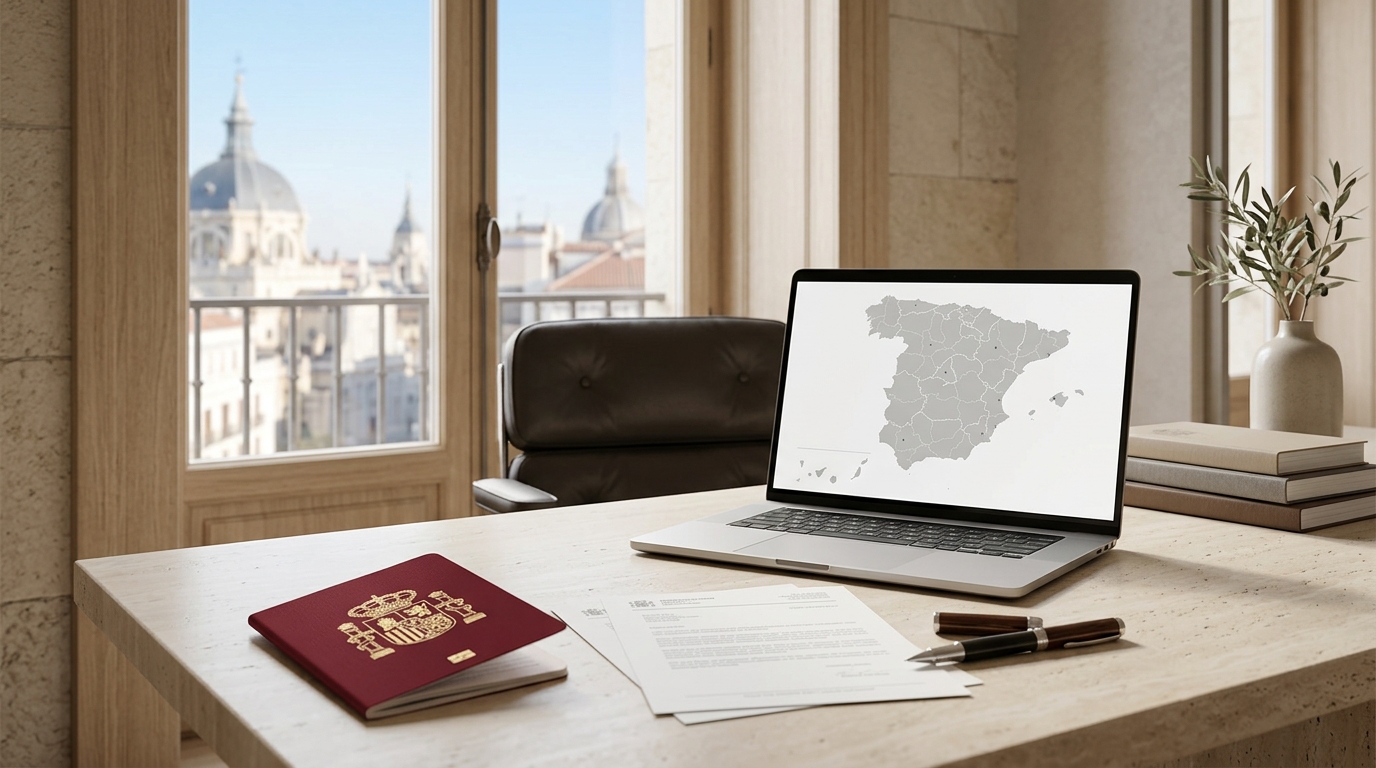


Moving to Spain from Dubai: a guide for foreigners
Spain continues to be one of the most attractive destinations in Europe for those looking to settle, invest, study or develop a professional activity.
For someone currently living in Dubai, moving to Spain may seem simple, but there are different entry and residency routes depending on their nationality, professional situation, income, family, and goals.
In this article we explain the main steps that a foreign citizen should take into account if they want to move from Dubai to Spain in 2026.
1. Do I need a visa to move to Spain from Dubai?
It mainly depends on your nationality.
Citizens of European Union countries, the European Economic Area and Switzerland have a different regime than citizens of third countries.
For non-EU citizens, a tourist stay does not simply allow them to move to Spain and live there indefinitely.
To reside for more than 90 days, it will be necessary to have the corresponding authorization or visa.
Among the options that may exist depending on each case are:
- Non-profit residence.
- Residence for international teleworkers.
- Residence for entrepreneurs.
- Residence for highly qualified professionals.
- Residence for employment.
- Self-employed residence.
- Student visa.
- Family reunification.
- Certain international mobility authorizations.
The Large Companies and Strategic Groups Unit currently considers, among others, authorizations for international teleworkers, entrepreneurs, highly qualified professionals, researchers and certain intra-company transfers.
2. What is the NIE?
The NIE is the Foreigner Identification Number.
It is a personal number that identifies a foreigner to certain Spanish administrations and entities.
It may be necessary, among other situations, for:
- Buying or selling a property.
- Open a bank account.
- To carry out certain economic operations.
- To create a company.
- Formalize certain contracts.
- Carry out administrative procedures.
If you don't yet have a NIE, you can consult the service of NIE online from NIESPAÑA.
3. Which residence might be suitable?
There is no single residence valid for all expatriates.
For example, a person with sufficient assets who will not be working in Spain can study for non-lucrative residency.
A person who works remotely for foreign companies can analyze the authorization for international teleworkers.
An entrepreneur can study for an authorization related to their business activity or project.
Therefore, choosing the type of residence first and then preparing the documentation is usually much more efficient than starting to request documents without knowing exactly which authorization is appropriate.
4. Can I buy a home before becoming a resident?
Buying a property and residency are different things.
A foreigner can buy a home in Spain without the purchase automatically implying obtaining residency.
A NIE (Foreigner Identification Number) may be required for certain real estate transactions.
You can also consult the NIESPAÑA guide on NIE to buy a property in Spain.
5. What if I want to move my family?
The situation changes if you also want to move your spouse, partner, or children.
Some authorizations allow certain family members to accompany the holder, while in other cases it will be necessary to study specific procedures.
Therefore, it is important to analyze the family situation from the beginning.
Conclusion
Moving from Dubai to Spain involves much more than booking a flight and renting a home.
Nationality, professional activity, income, assets, and family composition determine what options may exist.
At NIESPAÑA we study each individual situation and help foreigners with NIE, visas and residence permits.
Check out NIESPAÑA's services to analyze your case before starting the process.